What is the Bitcoin halving and why does it matter?
What the halving is, why it is written into Bitcoin's code, how the block reward has dropped since 2012 and what to expect from the next one, no promises.
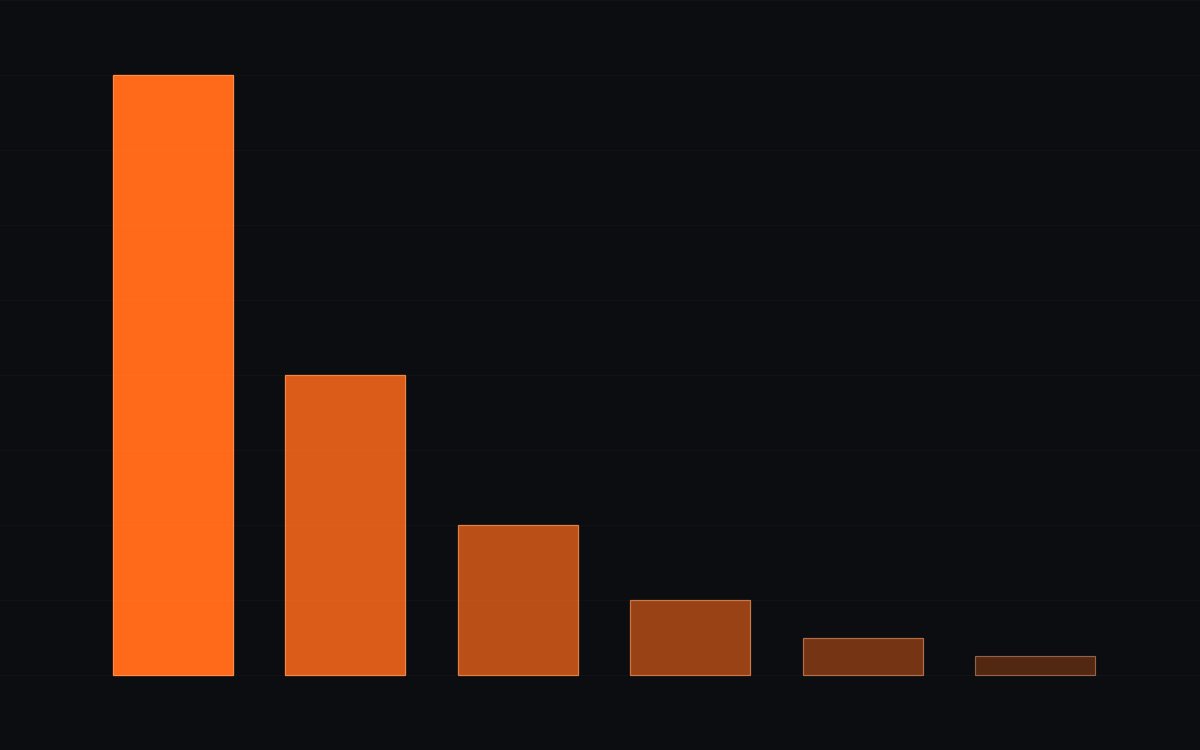
The halving is the moment when the reward miners get for each Bitcoin block is cut in half. It happens every 210,000 blocks, roughly every four years, and it has been written into the code from the start. Its job is to control issuance until the maximum supply of 21 million BTC is reached.
What the halving is
The halving is an automatic cut in half of the block reward. Every time a miner adds a new block to the chain, they receive a fixed amount of newly created BTC plus the fees from the transactions in that block. That fixed amount is what gets cut.
Bitcoin produces a block every 10 minutes on average. The halving happens every 210,000 blocks, which works out to about four years. Nobody decides it: the nodes on the network simply reject any block that tries to pay itself more than allowed.
You will see it called the halving or the halvening. Both mean the same thing.
Why it exists
The halving is how Bitcoin controls its inflation. Satoshi Nakamoto designed a decreasing issuance: a lot at the start, to distribute coins and attract miners, and less and less over time.
The result is a maximum supply of 21 million BTC. The sum of all rewards, cut in half every 210,000 blocks, converges on that number. That is why people say Bitcoin has a predictable monetary policy: anyone can calculate how many BTC will be in circulation at a given block height.
In the long run, the idea is that miners rely more and more on fees and less on new issuance. Whether that model is enough to keep the network secure is one of the open debates in Bitcoin.
History of the halvings
Since the genesis block, in January 2009, there have been four halvings.
| Halving | Year | Block | Reward before | Reward after |
|---|---|---|---|---|
| First | 2012 | 210,000 | 50 BTC | 25 BTC |
| Second | 2016 | 420,000 | 25 BTC | 12.5 BTC |
| Third | 2020 | 630,000 | 12.5 BTC | 6.25 BTC |
| Fourth | 2024 | 840,000 | 6.25 BTC | 3.125 BTC |
Today each block issues 3.125 new BTC. More than 90% of the 21 million is already in circulation, so each halving cuts a smaller and smaller slice of the total.
When the next one is
The fifth halving will happen at block 1,050,000 and will lower the reward to 1.5625 BTC. At the network’s current pace, it is expected around 2028, probably in the first half of the year.
There is no exact date because Bitcoin does not measure time in days but in blocks. If miners add hashing power, blocks come a little faster until the network adjusts the difficulty, every 2,016 blocks. That is why the countdowns you see online keep getting corrected. If you want to follow it, check the current block height on an explorer like mempool.space.
Effects people attribute to it
The most common argument is supply and demand: if less new BTC enters the market and demand holds, the price should rise. Miners sell part of what they mine to cover costs, so less issuance means less selling pressure.
Other effects people mention:
- Pressure on miners. With half the income per block, the least efficient miners can be pushed out of the market if the price doesn’t keep up.
- Narrative and attention. Every halving brings media coverage and puts Bitcoin back in the conversation.
- The famous four-year cycle. Many investors frame their view of the market around the halving. We explain it in detail in the Bitcoin four-year cycle.
Why there is no guarantee
Something happening after four halvings does not make it a law. There are very few cases, and outside factors played a role in each one: interest rates, global liquidity, new investors coming in, regulation.
The impact of the cut also shrinks over time. In 2012, new issuance was huge compared with the existing total. Today it is a smaller fraction, and the price depends more and more on demand: for example, from products like Bitcoin ETFs.
The halving is also public and known in advance. Part of the market argues that, for that reason, its effects should already be priced in before it happens.
Be careful with promises
If someone assures you the next halving will take the price to a specific number, be skeptical. Nobody can know that. Use the halving to understand how Bitcoin works, not as a buy signal.
What to do with this information
- Think of the halving as part of Bitcoin’s monetary design, not as a trading event.
- If you hold BTC for the long term, the halving doesn’t require you to do anything. What matters is where and how you store it: start with Bitcoin self-custody step by step.
- If you see countdowns with an exact date and time, remember they are estimates based on block height.
FAQ
When is the next Bitcoin halving?
It will happen at block 1,050,000. Based on the pace of block production, it is expected around 2028, probably in the first half of the year, but the exact date depends on how fast blocks are mined.
Does the halving make the Bitcoin price go up?
There is no guarantee. In past cycles the price rose in the months that followed, but many other factors were involved, and a sample of four events is far too small to draw a rule from.
What happens when all 21 million are mined?
That is expected to happen around 2140. From then on, miners will no longer receive new BTC and will rely on transaction fees.
This guide is educational and is not financial advice. Spotted an error? Request a correction.