How to choose a crypto exchange: 7 checks before you sign up
What to check before you pick an exchange: registration in your country, fees, liquidity, deposits and withdrawals, security, proof of reserves and support.
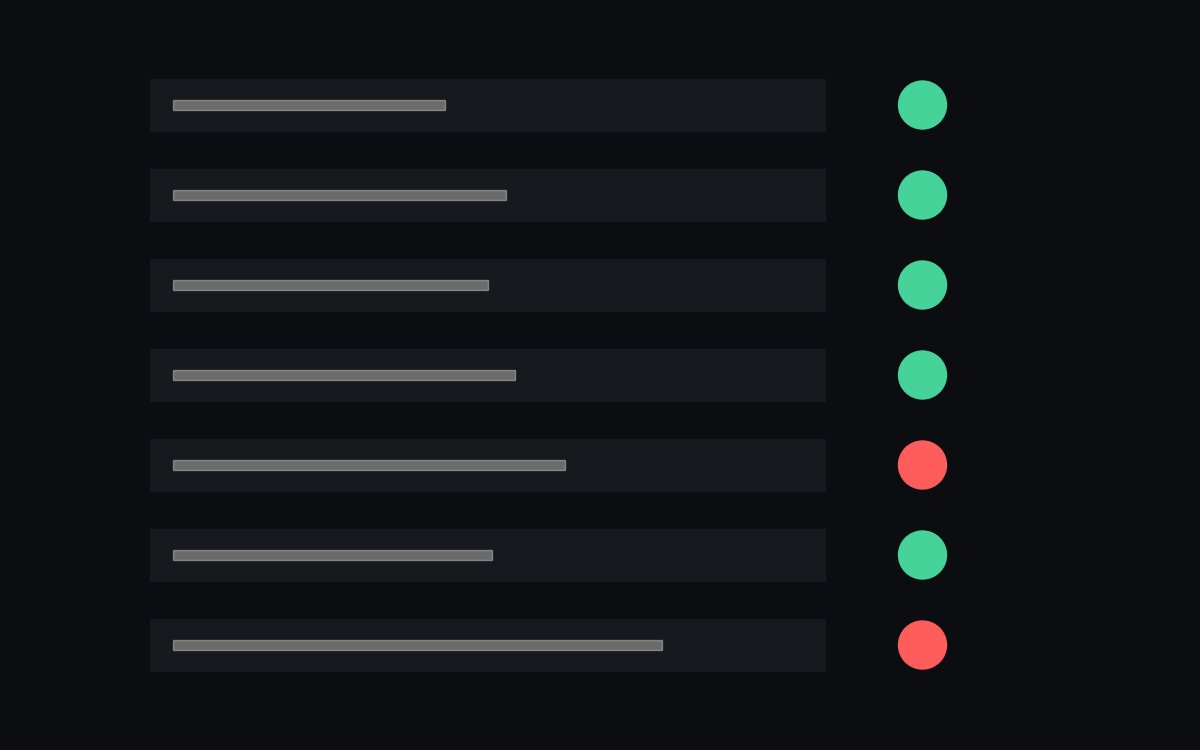
To choose an exchange, first confirm that it is registered or authorized in your country. Then compare the total cost of trading (fees and spread), liquidity, deposit and withdrawal methods, security measures, whether it publishes proof of reserves and how support responds. There is no perfect exchange: there is the one that meets your minimum criteria.
Start with registration in your country
The first thing is to find out whether the exchange is registered or authorized where you live. It does not remove the risk, but it gives you a floor: someone supervises the company and you have somewhere to file a complaint.
- Argentina. The Comisión Nacional de Valores (CNV) created the registry of Virtual Asset Service Providers (PSAV) with General Resolution 994, in line with Law 27,739. It later expanded the requirements with General Resolution 1058, from March 2025. You can check the registry on the official CNV website.
- Spain. The European MiCA regulation applies, and the CNMV is the authority that supervises compliance. The transition period in Spain ended on July 1, 2026: since then, only authorized providers can operate. The CNMV recommends checking authorization in its registry and in that of ESMA, the European regulator.
- Other countries. Look up the local financial regulator and its list of authorized entities. If you can’t find clear information, treat that as a signal to weigh.
Watch out for one detail: an exchange being registered in one country does not mean it is authorized in yours. Check which legal entity you sign the contract with when you open the account.
Fees: look at the total cost
The advertised fee is not always what you pay. The real cost of buying and selling adds up several layers.
| Cost | What it is | Where it shows up |
|---|---|---|
| Trading fee | A percentage on each trade | The exchange’s fee schedule |
| Spread | The difference between the buy price and the sell price | Mostly on quick buys or in simple mode |
| Deposit | Cost to add money, depending on the method | Deposits section |
| Withdrawal | Fixed or variable cost to take out funds or crypto | Withdrawals section, per network |
| Currency conversion | Exchange rate difference if you trade in another currency | When depositing or withdrawing local currency |
A good test is to work out how much you would get back if you bought an amount and sold it at the same moment. That difference is your round-trip cost. The numbers change often: check them on the exchange’s website on the day you plan to trade.
Liquidity and deposit and withdrawal methods
Liquidity is how easily you can buy or sell without moving the price. On an exchange with little liquidity, a mid-sized order can fill at a worse price than the one you saw. That difference is called slippage, and we explain it in what slippage is.
To check it, look at the order book for the pair you care about: how many orders sit near the price and how large they are.
Deposits and withdrawals matter as much as trading. Ask yourself:
- Does it accept your local currency and the method you use (bank transfer, card, others)?
- What limits does it have and how long does each method take?
- Does it let you withdraw crypto to your own wallet, and on which networks?
- Have there been recent public complaints about delayed or blocked withdrawals?
An exchange that lets you in easily but makes it hard to get out is a bad sign.
Security and proof of reserves
Check what tools the exchange gives you to protect your account. The minimum should be:
We explain how to set all of this up step by step in how to secure your exchange account.
Proof of reserves is a report in which the exchange shows that it holds its customers’ assets. It often lets each user verify that their balance is included. It is a good sign, but it has limits: it is usually a snapshot of one moment and does not always include the company’s liabilities. Give it more weight if it is periodic and reviewed by an independent third party.
Support and customer service
Support matters when something goes wrong, and in crypto something always goes wrong at some point. Before you deposit large funds:
- Send a simple question and see how long they take to answer and whether the answer helps.
- Check whether there is support in your language and through official channels inside the app or website.
- Confirm that the exchange will never ask for your password or your 2FA codes.
That last point is key: fake support accounts on social media and Telegram are one of the most common scams. We go into detail in how to spot crypto scams.
What to do now
Make a short list of two or three exchanges you are interested in and run them through these seven filters: registration, fees, liquidity, deposits and withdrawals, security, proof of reserves and support. Nothing mentioned in this guide is a recommendation: conditions change, so verify everything with official sources before you decide.
If you are buying in Argentina or Spain, continue with how to buy Bitcoin in Argentina or how to buy crypto in Spain. And remember that leaving everything on an exchange means trusting a third party: for amounts you plan to hold long term, consider self-custody.
FAQ
How do I know if an exchange is registered in Argentina?
The Comisión Nacional de Valores (CNV), Argentina's securities regulator, keeps a registry of Virtual Asset Service Providers (PSAV). You can check it on the official CNV website before opening an account.
How do I know if an exchange can operate in Spain?
In Spain, the CNMV supervises crypto-asset service providers under the European MiCA regulation. Check the CNMV registry and the ESMA registry to confirm that the provider is authorized.
Does proof of reserves guarantee my money is safe?
No. It shows that the exchange holds certain assets at a given moment, but it does not always show its liabilities or guarantee how it manages those assets afterward. It is a useful signal, not insurance.
This guide is educational and is not financial advice. Spotted an error? Request a correction.