What is slippage and how to set it without losing money
The difference between slippage and price impact, how to set your tolerance on a DEX, how it relates to MEV and sandwich attacks, and reference values.
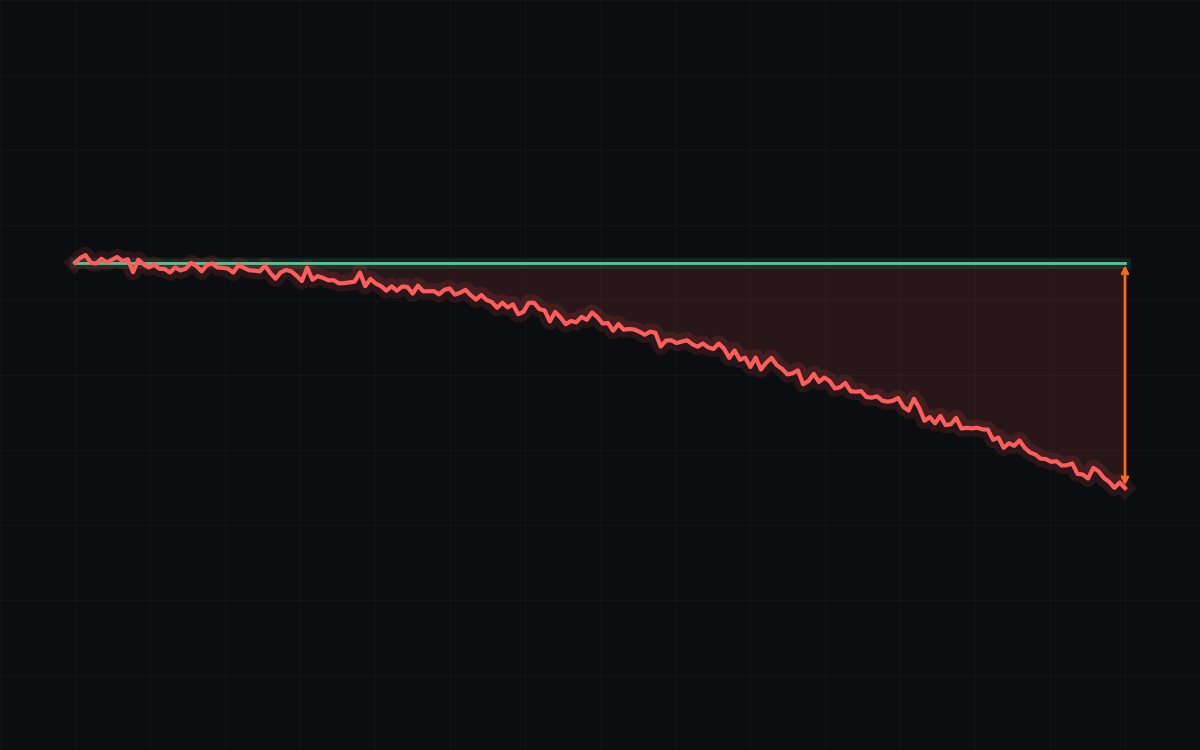
Slippage is the difference between the price you see when you set up a trade and the price it executes at. Slippage tolerance is the maximum you accept: if the price moves more, the trade fails. A very high tolerance exposes you to sandwich attacks; a very low one makes your trades fail on volatile tokens.
Slippage and price impact: two different things
When you swap on a DEX, the price you see is an estimate. Until the trade confirms, two things can happen.
- Price impact: your own order moves the price. In a pool with little liquidity, buying a lot leaves fewer tokens in the pool and the price rises while you buy. The DEX calculates it before you sign.
- Slippage: the difference between the expected price and the execution price. It includes the price impact and any movement caused by others in the meantime.
An example: you want to buy a token with little liquidity. The DEX shows you a high price impact. That means you will pay quite a bit more than the on-screen price, even if no one else trades. And when you sell, the same will happen in the opposite direction.
What slippage tolerance is
Tolerance is the limit you set. If the execution price moves further than that percentage from the estimated price, the trade fails and doesn’t execute.
Low tolerance
Protects you from overpaying, but on fast-moving tokens many trades fail.
Good for liquid pairsHigh tolerance
The trade almost always goes through, but you accept paying much more than the on-screen price.
Sandwich riskAutomatic
Some aggregators calculate it based on volatility and liquidity. Jupiter, for example, estimates it in real time in its Ultra mode.
Check which value it choseMEV and sandwich attacks
MEV (maximal extractable value) is the profit captured by whoever can order or insert transactions around yours. The most common case against retail traders is the sandwich attack.
- Your order is visible before it confirms, with a high slippage tolerance.
- A bot buys before you and pushes the price up.
- Your buy executes at a higher price, within the limit you accepted.
- The bot sells right after at that inflated price and keeps the difference.
The key is step 3: the bot can only take as much as your tolerance allows. The higher you set it, the more room you give it. That’s why setting a very high tolerance “just to get in” is expensive.
Some interfaces offer transaction sending with MEV protection. For example, Jupiter’s documentation states that its Ultra mode includes MEV-resistant execution, but its manual mode does not. Check what the tool you use offers and in which mode.
How to set it in practice
Reference values change with the pair, the network and the moment. As a general guide:
| Pair type | What to expect | Approach |
|---|---|---|
| Stablecoin to stablecoin | Minimal movement | Very low tolerance |
| Large tokens with deep liquidity | Moderate movement | Low tolerance |
| New or low-liquidity memecoins | Strong, fast movement | More tolerance, but with a deliberate cap and small amounts |
Sky-high slippage is not a strategy
Setting the tolerance to the maximum to get into a launch no matter what usually ends with buying the top of a candle, often against snipers and bots. If a token only fills with a huge tolerance, that is a sign the liquidity is not enough for your order.
What to do now
- Check the tolerance saved in your wallet, DEX and bots, and lower it to a reasonable value for what you trade.
- Before getting into a token, check its liquidity on DEX Screener and work out how much your order moves the price.
- If you use bots, read about the risks of Telegram trading bots and understand how snipers and bundles operate at launches.
FAQ
What slippage should I set?
There is no single number. On liquid, stable pairs low values are enough; on new memecoins you need more. Use the minimum that gets your trade executed and avoid high default values.
What is the difference between slippage and price impact?
Price impact is how much your own order moves the price, based on the pool's liquidity. Slippage includes that plus whatever the price changes between the moment you sign and execution.
What is a sandwich attack?
A bot sees your pending order, buys right before it to push the price up, lets your order execute at a higher price and sells right after. Its profit comes out of your slippage tolerance.
This guide is educational and is not financial advice. Spotted an error? Request a correction.