How to read a token on DEX Screener: what to check and ignore
Pair age, liquidity, FDV vs market cap, volume, transactions and holders: what each DEX Screener metric means and which signals are red flags.
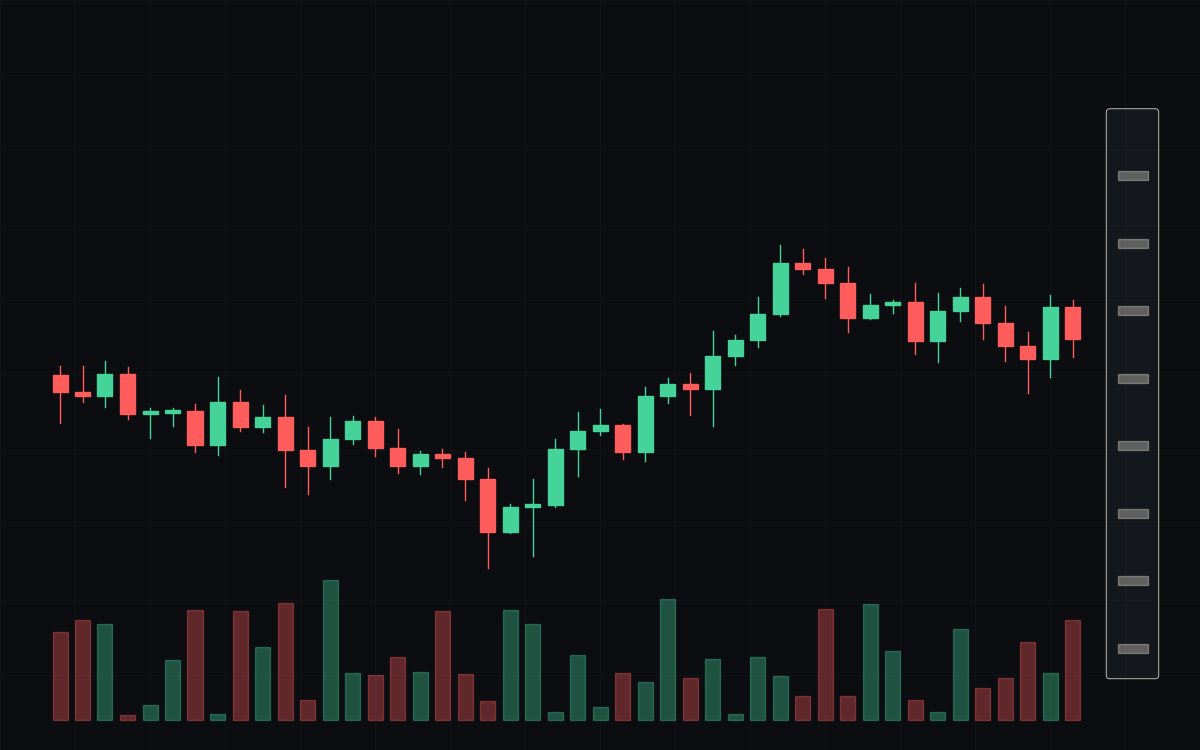
On DEX Screener, check the pair age and liquidity first, then compare the FDV with the liquidity, and see whether the volume comes from many different wallets or just a few. Buys and sells should be balanced in number of wallets. A boost or a verified profile is a paid service, not a safety endorsement.
What DEX Screener is and what it isn’t
DEX Screener is an aggregator that shows, in real time, the pairs trading on decentralized exchanges (DEXs) across many chains. It lets you see price, liquidity, volume and trades for any token as soon as it has a single transaction.
What it isn’t: a quality filter. According to its own terms, the data is processed automatically and without human moderation. Any token with one transaction can show up. Being listed says nothing about whether it is safe.
The key metrics, one by one
Open a pair and you’ll see a panel of metrics. These are the ones that matter:
| Metric | What it is | What to look for |
|---|---|---|
| Pair age | Time since the pool was created | A pair that is minutes or hours old has very little history: everything is more volatile and easier to manipulate |
| Liquidity | Dollar value of the two assets in the pool | If it is low relative to the FDV, any large sell sinks the price |
| FDV | Total supply minus burned, times the price | The theoretical value if the whole supply traded at that price |
| Market cap | Circulating supply times the price | If it differs a lot from the FDV, there are tokens not yet circulating that could hit the market |
| Volume | Amount traded in a time window | High volume with few wallets can be inflated activity |
| Transactions | Counted buys and sells | Compare the number of buys and sells, and of buyers and sellers |
| Makers | Distinct wallets that traded | A few wallets with many trades is a bad sign |
An example reading: a token with an FDV of several million and liquidity of a few thousand is highly exposed. A single mid-sized sell moves the price hard, up or down.
Red flags
These are the ones that show up most often in tokens that end badly:
Boosts, trending and profiles: what is paid for
Part of what you see on DEX Screener is advertising or a paid service:
- Boosts: paid packages that temporarily raise a token’s trending score. DEX Screener states they don’t guarantee the top spot, but they do buy visibility.
- Enhanced Token Info: a paid service that lets a token show its logo, description and socials without waiting for external lists.
- Trending: a ranking based on a private algorithm that combines volume, liquidity, transactions, makers, holders, views and reactions.
None of that is an audit. A token can pay for boosts, have a complete profile and still be a rug. Treat those signals as the project’s own marketing.
How to check a token in two minutes
- Search by contract address, not by name. There are dozens of tokens with the same ticker.
- Check age and liquidity before the price or the chart.
- Compare FDV, market cap and liquidity. If they don’t add up, figure out why.
- Open the transactions tab and see whether the buyers are different wallets or the same ones repeating.
- Review the top holders and open the map in Bubblemaps to see if they are connected.
- Cross-check with a scanner such as RugCheck on Solana or a sell simulator on EVM, as we explain in how to spot a rug pull.
What to do now
- Add three or four newly launched tokens to your watchlist and follow how liquidity, makers and holders change in the first hours.
- Learn to recognize the patterns of snipers, bundles and insider wallets on the chart and in the transaction list.
- Before trading, calculate the price impact of your order: the slippage guide explains how.
FAQ
What is the difference between FDV and market cap on DEX Screener?
FDV is the total supply minus burned tokens, multiplied by the price. Market cap uses the circulating supply when the project reports it; if not, it usually matches the FDV.
Is a token with boosts or on trending trustworthy?
No. Boosts are paid packages that raise the trending score for a while. DEX Screener states that it does not moderate tokens and that everyone should do their own research before trading.
How much liquidity is enough?
There is no fixed number. What matters is the ratio to your trade: if your buy moves the price a lot, the liquidity is too thin for you, and the same will happen when you sell.
This guide is educational and is not financial advice. Spotted an error? Request a correction.