What is Bitcoin dominance and how do you read it?
What Bitcoin dominance measures, how it is calculated, what people mean by altcoin season and why stablecoins can distort the indicator.
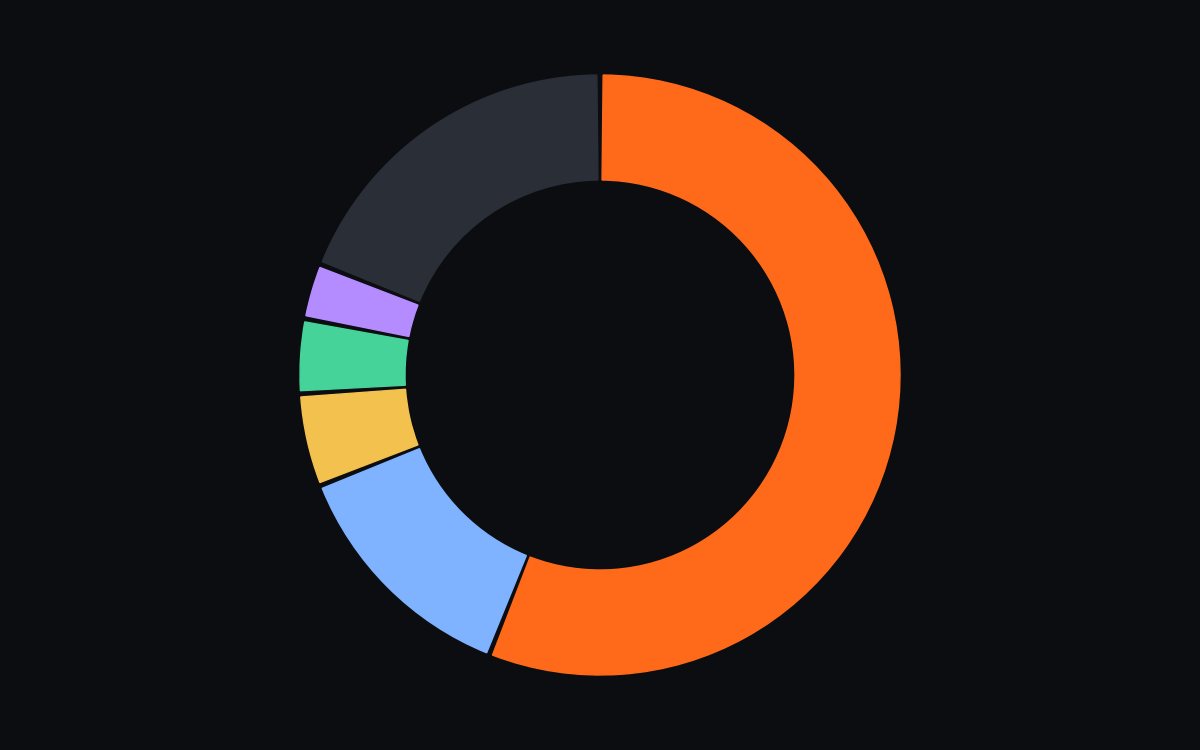
Bitcoin dominance is the percentage of the total crypto market cap that Bitcoin's market cap represents. It shows whether money is concentrating in BTC or spreading into other coins. It is a useful but imperfect signal, because the denominator includes stablecoins and thousands of tokens of doubtful value.
What it measures
Bitcoin dominance measures what share of the total crypto market Bitcoin takes up. If it is at 50%, half the value of all cryptocurrencies is in BTC.
The number is used as a gauge of risk appetite. Bitcoin is the most liquid asset in the sector and the one with the longest history. When investors turn cautious, they tend to concentrate in it. When they look for more risk, money tends to flow toward altcoins, which are all the cryptocurrencies that are not Bitcoin.
How it is calculated
The formula is simple:
Dominance = Bitcoin market cap / total crypto market cap × 100
Market cap is the price multiplied by the number of units in circulation. For Bitcoin, that is the price of one BTC times the BTC issued so far.
The problem is in the denominator. “Total market” depends on which assets each site includes. Some add up thousands of tokens with unreliable prices or no real liquidity. That is why CoinMarketCap, CoinGecko and TradingView can show different values on the same day. What matters is to always compare against the same source.
How to read it
Read dominance together with Bitcoin’s price. On its own, it doesn’t tell you whether the market is going up or down.
| BTC price | Dominance | Usual reading |
|---|---|---|
| Up | Up | Bitcoin leads; altcoins follow less |
| Up | Down | Money is moving into altcoins |
| Down | Up | Altcoins fall more than Bitcoin; a flight to safety |
| Down | Down | Altcoins hold up better, or the weight of stablecoins grows |
Altcoin season
Altcoin season is a period when many altcoins rise more than Bitcoin. In the market it is usually associated with a sustained drop in dominance while the total market rises.
Keep in mind: it is a label, not a scheduled event. There have been periods people called that and others when it was expected and didn’t arrive with the same strength. If you are thinking about rotating from BTC into altcoins because of this, remember that many of those coins carry risks Bitcoin doesn’t, from low liquidity to rug pulls.
Its limitations
Dominance is a useful indicator, but it has flaws built in. It is worth knowing them before you draw conclusions.
Stablecoins in the denominator
Stablecoins like USDT or USDC are part of the total market. If their supply grows, Bitcoin dominance falls even if nobody bought altcoins.
Check: versions of the indicator without stablecoinsTokens with no real liquidity
A new token with a huge supply and an inflated price adds paper market cap. That inflates the denominator.
Check: which assets the source includesDifferences between sources
Each site uses its own list of assets and its own calculation of circulating supply.
Check: always the same sourceCorrelation, not cause
Falling dominance does not make altcoins rise. It describes what is happening; it doesn't predict it.
Check: the market contextThe stablecoin point is the most important one. In moments of fear, many people sell crypto and move into digital dollars. That raises the weight of stablecoins and can lower BTC dominance right when the market is in risk-off mode. If you want to understand them better, see what are stablecoins.
Some charting platforms let you build or look up a dominance figure that excludes stablecoins. Comparing it with the standard version helps you see whether the move is real or an effect of the denominator.
What to do with this information
- Use dominance as context, not as a buy or sell signal.
- Always compare on the same source and, if you can, also look at the version without stablecoins.
- Read it together with other data, like the fear and greed index or the stage of the four-year cycle.
- If you are a long-term holder, a change in dominance doesn’t change your thesis for holding Bitcoin.
FAQ
Where can I see Bitcoin dominance?
On data aggregators like CoinMarketCap or CoinGecko, and on charting platforms like TradingView, which lists it under the symbol BTC.D. Each source can show a slightly different value depending on which assets it includes.
If dominance falls, does altcoin season start?
Not necessarily. Dominance also falls if the weight of stablecoins grows or if Bitcoin's price drops more than other coins. You need to look at why it is falling.
Is high dominance good or bad?
On its own it is neither good nor bad. It shows that the market is concentrating more value in Bitcoin relative to everything else, which is common when investors are risk-averse.
This guide is educational and is not financial advice. Spotted an error? Request a correction.