What is Pump.fun and how do bonding curves work?
How a token launches on Pump.fun and other Solana launchpads, how the price rises on the bonding curve and what happens when it graduates.
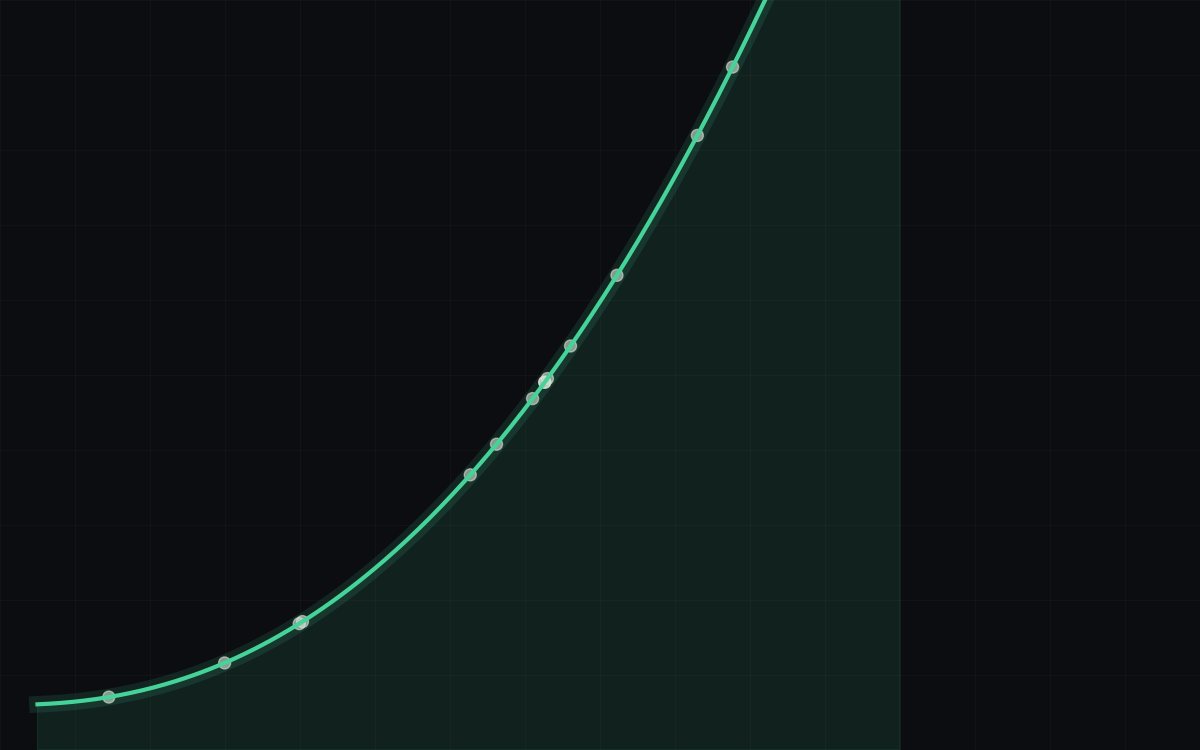
Pump.fun is a Solana launchpad where anyone can create a token that starts trading on a bonding curve: a contract that sets the price based on how many tokens have been bought. When the whole curve allocation sells out, the token graduates and its liquidity moves to a pool on PumpSwap, Pump.fun's DEX. Graduating does not make a token safer.
What Pump.fun is
Pump.fun is a Solana platform for creating and trading tokens without writing any code. You set a name, ticker and image, and the token starts trading within minutes. According to its documentation, creating a token has no platform fee: you only pay the Solana network fee and a small SOL deposit for the token accounts.
That ease is the reason for its success and also its problem. Thousands of tokens launch every day, and the vast majority don’t survive the first few hours. Pump.fun does not review projects: anyone can launch anything.
It is not the only launchpad. Others work on the same logic:
Pump.fun
The best-known launchpad on Solana. Tokens that graduate move to PumpSwap, its own DEX.
Destination: PumpSwapLetsBONK.fun
Launchpad from the BONK ecosystem built on LaunchLab, the Raydium launch tool.
Destination: Raydium poolsRaydium LaunchLab
Raydium infrastructure used by several launchpads. Since an August 2026 update, new launches migrate to Raydium CPMM pools.
Destination: Raydium CPMMMeteora DBC
Meteora's Dynamic Bonding Curve: a configurable curve that other launchpads use as a template.
Destination: Meteora DAMM v2 poolsHow the bonding curve works
A bonding curve is a contract that sells tokens at a price that rises as they are bought. There is no traditional liquidity pool and no creator putting in SOL: the contract itself is the counterparty.
- You buy: you send SOL to the contract and receive tokens. Each purchase leaves fewer tokens on the curve and the price goes up.
- You sell: you return tokens to the contract and receive SOL. The price goes down.
- Price by formula: the price depends on how many tokens remain on the curve, not on an order book.
On Pump.fun every token has a fixed supply of 1 billion. About 800 million are sold on the curve; the rest is reserved for the pool’s liquidity when the token graduates.
The practical consequence: the first buyers get in much cheaper than the last ones. That’s why the first seconds of a launch are dominated by bots and snipers (we explain this in snipers, bundles and insider wallets).
What happens when a token graduates
When the whole curve allocation has been bought, the token graduates. Pump.fun automatically creates a pool on PumpSwap with the accumulated SOL and the reserved tokens, and trading on the curve closes.
Before March 2025, graduated tokens migrated to Raydium and the migration carried a 6 SOL fee. Today they migrate to PumpSwap. Pump.fun’s documentation lists a graduation fee of 0.015 SOL per token, which for SOL pairs is deducted from the curve.
Keep three things in mind about the moment of graduation:
- Liquidity arrives, and so do the sells. Many wallets that got in early wait for this moment to sell into a deeper pool.
- The token shows up on more screens. Aggregators and DEX Screener give it more visibility, and that draws new buyers who often become the exit for the early ones.
- The graduation market cap is low. According to Bitquery data, it is usually around a few tens of thousands of dollars, depending on the SOL price. It is a small token, not a validated one.
Fees: how to read them without relying on old numbers
Pump.fun has changed its fee structure several times. As of October 2026, its official page states:
| Stage | Total fee | How it is split |
|---|---|---|
| Bonding curve (SOL and USDC pairs) | 1.25% | 0.30% creator, 0.95% protocol |
| PumpSwap, canonical pools | Tiered: starts at 1.25% and drops to 0.30% as the market cap rises | Creator, protocol and liquidity providers |
On top of this come network fees and, if you trade through a bot or a third-party interface, its own fees. If a single trade routes through several pools, some interfaces charge on each one.
Fees change
Pump.fun adjusts its model frequently. Before trading, check the fees page in its official documentation. What you read in an X thread from three months ago probably no longer applies.
What to check before buying a token on the curve
The curve guarantees you can sell as long as there is SOL in the contract, but it doesn’t protect you from anything else. Before buying:
For those checks, use how to read a token on DEX Screener, how to use Bubblemaps and the guide on how to spot a rug pull.
What to do now
- Open a newly launched token and watch its progress on the curve without buying. Notice what happens to the price when it graduates.
- Read the Pump.fun fees page and work out how much it costs you to get in and out with a small amount.
- If you are going to trade, use a separate wallet with an amount you can lose entirely, and review how to set your slippage.
FAQ
When does a Pump.fun token graduate?
When the entire allocation of tokens assigned to the bonding curve has been bought. At that moment the accumulated liquidity migrates automatically to a PumpSwap pool and trading continues there.
How much does Pump.fun charge to trade?
There is a fee per trade on the curve and another one, tiered by market cap, on PumpSwap after graduation. They change often: check the Pump.fun fees page before you trade.
Is a graduated token safer?
No. Graduating only means there was enough buying. The supply can still be concentrated in a few wallets or in snipers who sell as soon as the liquidity arrives.
This guide is educational and is not financial advice. Spotted an error? Request a correction.